The Art and Heritage of Banaras Weaving
In the ancient lanes of Banaras, weaving is more than a craft. It is a tradition shaped by patience, skill, and generations of knowledge.
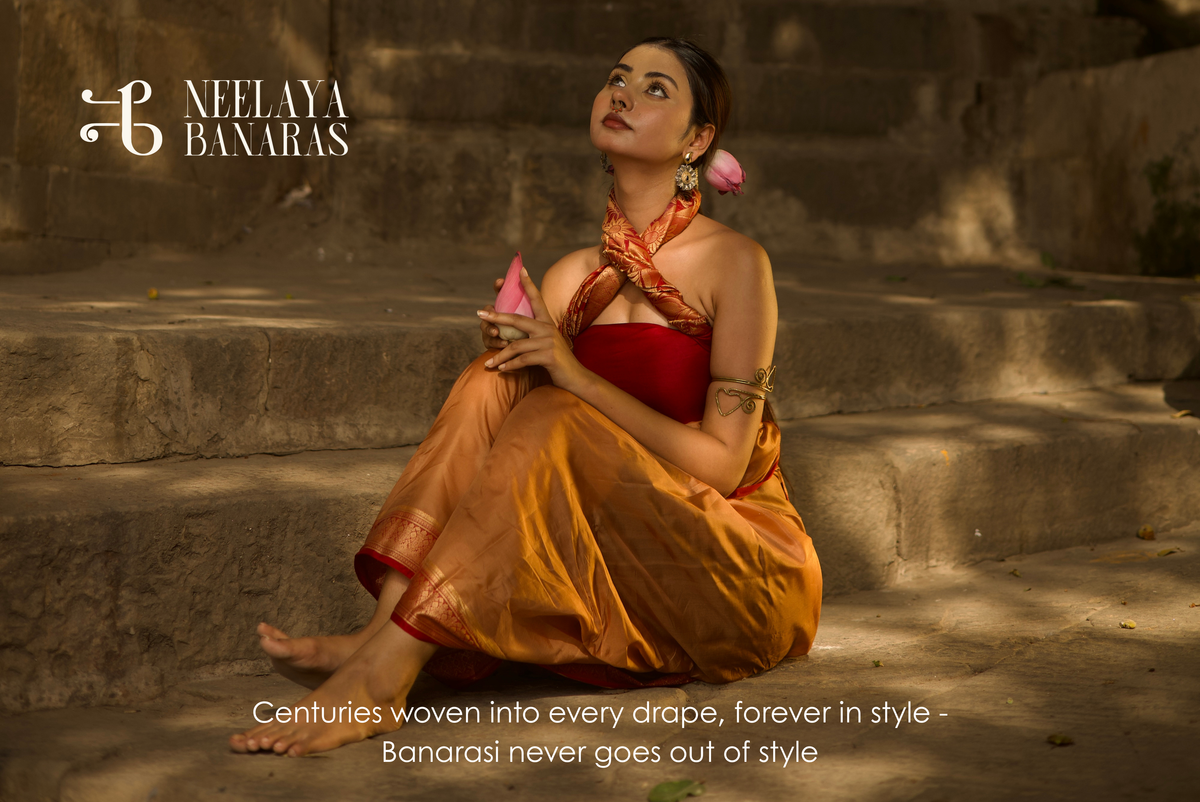
For centuries, the city has been known for its exquisite textiles, particularly the Banarasi saree—a symbol of Indian craftsmanship that continues to hold a special place in celebrations, weddings, and wardrobes across generations.
Behind every Banarasi weave lies a story. A story of the artisan, the loom, the silk, and a heritage that has been carefully preserved through time.
Where Heritage Meets the Loom
The beauty of Banaras weaving begins at the loom.
What may appear to be a simple saree is the result of countless carefully planned details. Silk threads are prepared, designs are translated into weaving patterns, and intricate motifs are brought to life thread by thread.
Traditional motifs such as florals, butis, jaals, vines, and geometric patterns have long been part of the Banarasi vocabulary. Zari adds another dimension, catching the light as the saree moves and giving the fabric its unmistakable richness.
The result is not simply a piece of clothing.
It is a work of textile art.
The Hands Behind the Craft
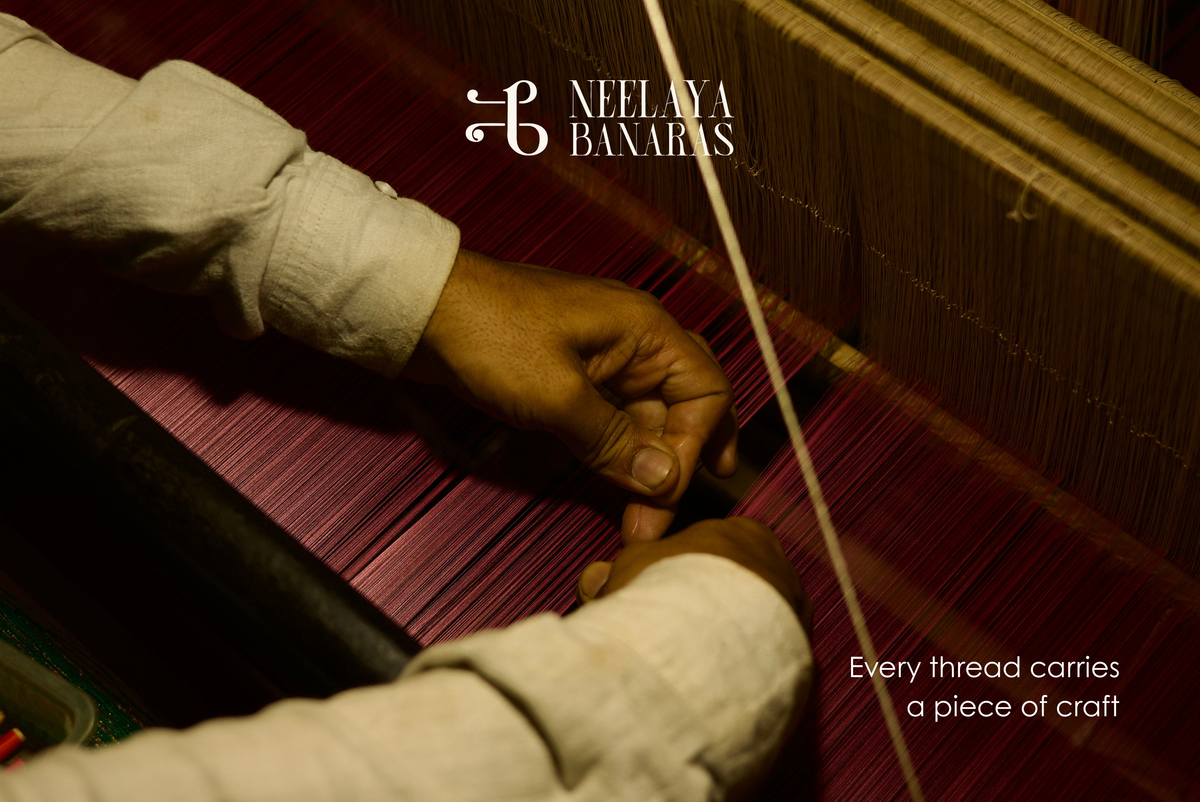
Every Banarasi saree carries the touch of an artisan.
Weaving requires concentration, precision, and an intimate understanding of the loom. The craft is often learned over years, with techniques and knowledge passed from one generation to the next.
For the weaver, the loom becomes an instrument of expression.
Every movement matters. Every thread has a purpose. Every motif demands attention.
This human element is what gives handwoven textiles their individuality. No two pieces feel entirely the same because behind each one is the rhythm, experience, and interpretation of the person who created it.
The Language of Banarasi Motifs
Banarasi weaving has its own visual language.
Floral patterns reflect the beauty of nature. Delicate butis create rhythm across the fabric, while elaborate jaals create a sense of grandeur. Traditional designs continue to inspire contemporary interpretations, allowing the craft to evolve without losing its identity.
These motifs are not merely decorative.
They connect today's sarees with a textile vocabulary that has been developed and refined over generations.
Silk and Zari: The Signature of Banaras
Silk provides the graceful drape and luminous surface that make a Banarasi saree so distinctive.
Zari, meanwhile, introduces the characteristic shimmer associated with the weave. When woven thoughtfully into the design, it creates an interplay of light across the saree—subtle in some designs and richly elaborate in others.
Together, silk and zari transform the loom into a canvas.
And the artisan becomes the artist.
A Heritage That Continues to Evolve
Tradition does not mean standing still.
Banaras weaving has continued to evolve with changing tastes, occasions, colours, and styles. Contemporary designs may explore new palettes and interpretations while retaining the essential character of the Banarasi weave.
This ability to evolve is one of the reasons the craft remains relevant.
A Banarasi saree can feel deeply traditional and remarkably contemporary at the same time.
It can belong to a wedding celebration, a festive gathering, a formal occasion, or simply become part of a modern wardrobe.
More Than a Saree
The true value of Banaras weaving cannot be measured only by the finished garment.
It lies in the knowledge preserved by artisans.
It lies in the hours spent at the loom.
It lies in the motifs that continue to travel from one generation to another.
And it lies in the emotional connection people form with a saree that becomes part of their most meaningful occasions.
A Banarasi saree is often purchased for a moment, but cherished for years.
That is the essence of heritage.
Preserving the Art of Banaras
In a world increasingly defined by speed and mass production, traditional weaving reminds us of the beauty of taking time.
Each handwoven piece represents a relationship between artisan and material, tradition and innovation, past and present.
Supporting authentic Banarasi craftsmanship means supporting this living heritage and the skilled hands that continue to keep it alive.
Because when we preserve the craft, we preserve more than a technique.
We preserve stories.
We preserve knowledge.
We preserve a cultural identity woven into every thread.
The Legacy Continues
The art of Banaras weaving has survived because it has never been just about making sarees. It is about creating something that carries meaning beyond its fabric.
From the quiet rhythm of the loom to the final shimmer of zari, every Banarasi saree reflects a heritage built through patience and perfected through generations.
And as long as these looms continue to move, the story of Banaras will continue to be woven—one thread, one motif, and one saree at a time.